The Keepsake Edit: Decluttering with Intention
A home serves us best when it’s a sanctuary for the present, not a mausoleum for the past. By curating your sentimental items, you can celebrate where you’ve been without losing sight of where you are. In this Minima Journal, I’ll share how to decide what to keep and how to move your most cherished items out of storage and into your life.
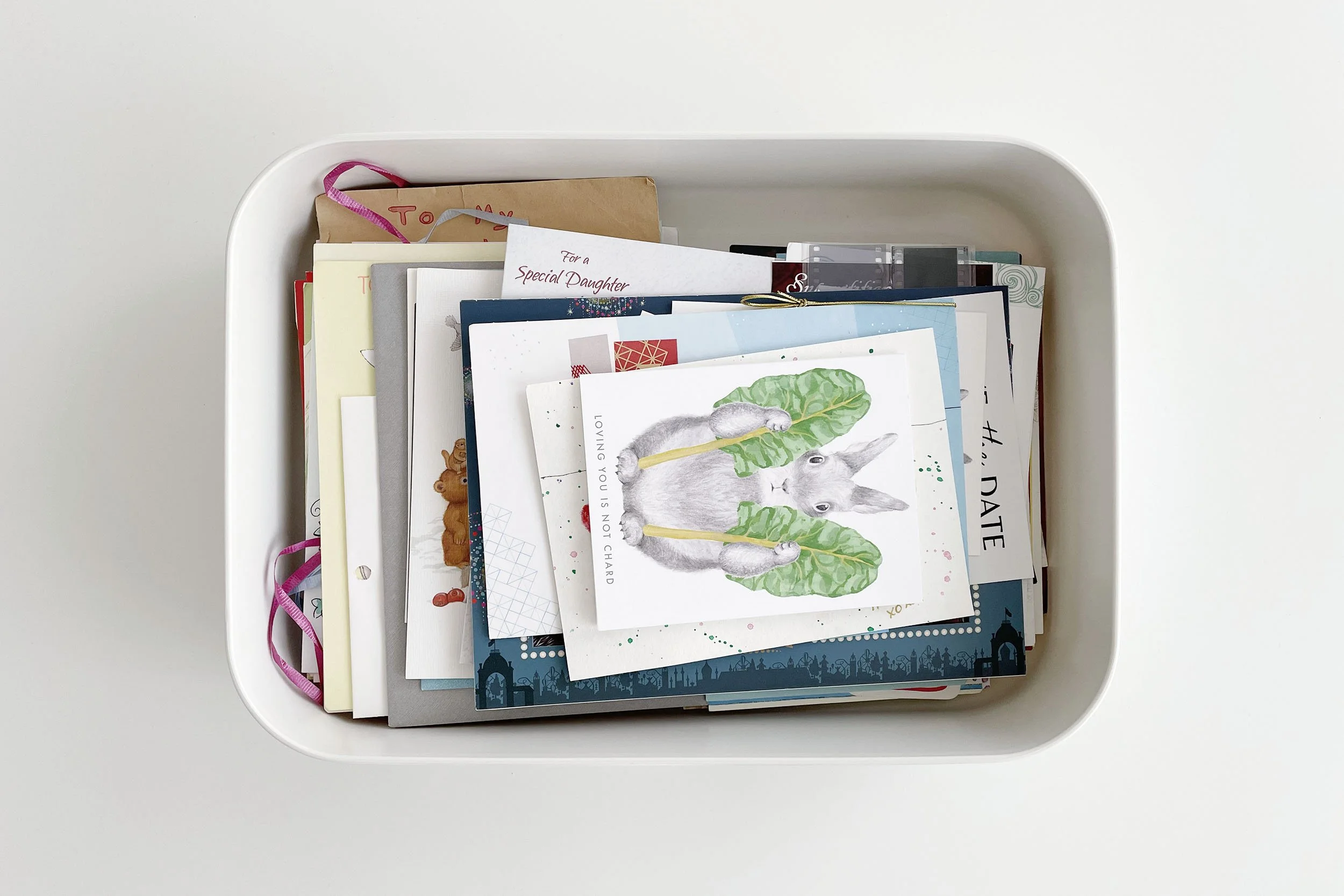
My only remaining physical keepsakes: cards from loved ones (mostly my mom and husband)
Deciding what to keep
Our memories live within us, not within our things. While objects from your past can act as meaningful triggers, it’s important to be selective—if everything is important, nothing is.
Instead of letting your collection dictate your space, set a physical boundary. My own keepsakes are contained within a single box (pictured above). When you limit the container, the editing process becomes a matter of choosing the very best. Gather your items together so you can see the volume at once: keep only those that evoke a strong, positive memory and let go of the rest.
This same selectivity can be applied to items you may be holding for others. Storing unwanted family keepsakes often creates an emotional burden heavier than the objects themselves. If the item is in your home, you have the agency to decide its future. Ask family members for a decision and set a firm deadline for pickup should someone agree to take it.
Living with your keepsakes
Once you’ve edited your collection, move those items out of storage and into your daily life. Use the heirloom china, refinish a vintage piece of furniture, or transform a single keepsake into art. This doesn’t mean your past must be on display in every corner of your home; living with an item may simply mean it’s stored in a curated, accessible way—like a small box of letters on a shelf—rather than being lost in the back of a closet.
Digitizing is a powerful tool to preserve history without the physical footprint. To build on the family photo collection my mom scanned years ago, I used a high-quality mobile scanner (affiliate link) to capture favorite diary entries and key yearbook pages. For family VHS tapes, I used a local service to digitize the footage and uploaded the videos to a private YouTube channel. This same approach works for 3D items or piles of children’s artwork—you can photograph the best pieces, or see if you already have an older photo of the object in use. These digital memories can then be consolidated into a single, slim book as my friend Alison Mazurek does.
As your relationship to objects changes, it’s healthy to release things that no longer carry the same sentimental weight. Letting go is often easier when an item can be used by another. I struggled with the idea of throwing away my childhood stuffed animals until I realized that donating them to the local animal shelter ensured they were enjoyed by another living thing.
I recommend saving sentimental items for the end of your whole-home decluttering project. Your decision-making muscles will be stronger, making these emotionally-charged objects easier to address. By letting go of items from your past, you’ll be able to experience the present moment more fully, making space for new memories.
If the process feels overwhelming, the Minima team can help. Simply fill out the form below and we’ll be in touch!